Loading insight


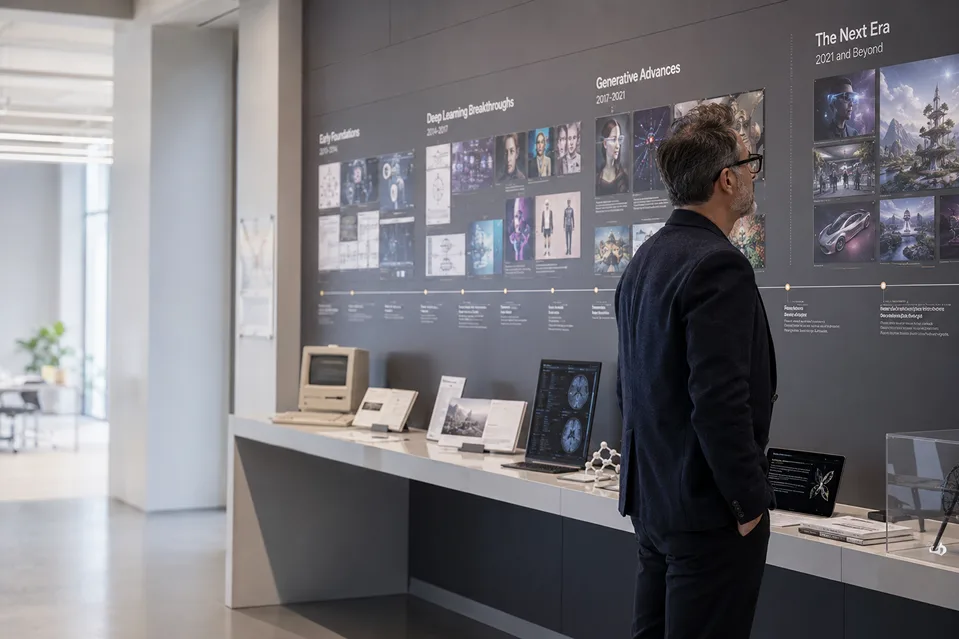
The Evolution of Generative AI marks a fascinating journey of technological progress, where each advancement builds upon the last, leading to the sophisticated systems we see today. This field has not only expanded the boundaries of what machines can create but has also reshaped industries and sparked ethical discussions.
Generative AI began as a theoretical concept, rooted in the desire to replicate human creativity. Early models were simple and limited but set the stage for more complex systems.
The first generative models were basic algorithms designed to mimic patterns in data. They laid the groundwork for future developments.
The introduction of machine learning algorithms in the 1980s and 1990s provided the tools necessary for more advanced generative models.
The resurgence of neural networks in the 2000s, particularly deep learning, catapulted Generative AI forward.
The deep learning revolution brought about models capable of generating realistic images, text, and even music, surpassing previous limitations.
The creation of GANs was a pivotal moment, introducing a novel way for AI to learn and create through adversarial processes.
Today, Generative AI is at the forefront of innovation, with applications ranging from art to drug discovery.
Current generative models can produce artworks indistinguishable from those created by humans, challenging our perceptions of creativity.
Generative AI is revolutionizing industries by providing solutions that were once thought impossible, from personalized content to advanced simulations.
As we look to the future, the potential of Generative AI continues to grow, promising even more remarkable advancements.
With great power comes great responsibility. The future of Generative AI must consider the ethical implications of its use.
The next generation of generative models will likely push the boundaries further, venturing into uncharted territories of innovation.
The Evolution of Generative AI is a testament to human ingenuity and our relentless pursuit of innovation. As we continue to push the limits of what AI can create, we must also ensure that we guide its growth responsibly, with an eye towards the ethical dimensions of artificial creativity.
The earliest generative models were simple pattern-recognition algorithms that laid the foundation for more complex systems.
Talk with Technossus about applying this thinking to your roadmap, architecture, or delivery model.